Want to be in the loop?
subscribe to
our notification
Business News
REAL ESTATE BUSINESS: RESTRICTIONS FOR FOREIGN INVESTORS
Smaller scope of investment compared to domestic investors
Foreign investors are prohibited from attempting two types of investment activities. First, they cannot sell divided land slots or invest in the development of technical infrastructure for a cemetery in order to transfer the land use rights attached to that infrastructure. Second, with regard to the construction and building of houses, foreign investors cannot purchase to sell, lease, or offer a lease purchase, but can only rent to sublease.
Restrictions on the number of houses permitted for ownership
Under Article 161 of the 2014 Housing Law, foreign-invested enterprises, foreign investment funds, branches of foreign banks operating in Viet Nam and foreign individuals that have been granted entry into Viet Nam may purchase, hire purchase, receive as gifts, inherit or own 30 per cent or less of the apartments in one building. In the case of single dwellings, including villas and semi-detached houses, no more than 250 houses can be purchased, lease purchased, received as gifts, inherited or owned in an area with a population equivalent to a ward-level administrative unit.
Decree 99 issued on October 20, 2015, contains detailed regulations on such cases. Specifically, for investment in commercial houses, where single houses are available for sale or hire purchase in an area with a population equivalent to a ward-level administrative unit, the foreign organisation or individual may own a number of individual houses as follows:
- One project with fewer than 2,500 single houses: Foreign organisations and individuals are allowed to own no more than 10 per cent of the total number of houses in the project;
- One project with 2,500 single houses: Foreign organisations and individuals are allowed to own no more than 250 houses in the project;
- Two or more projects with a total of 2,500 or fewer single houses: Foreign organisations and individuals are allowed to own no more than 10 per cent of the total number of houses in each project.
Limiting proceeds before buying and selling real estate that will be formed in the future
The payment of a contract value for real estate that will be formed in the future is done in several stages, based on construction progress. Before handing over the house or construction project to the customer, foreign-invested enterprises are only permitted to collect up to 50 per cent of the contract value, while the maximum rate applied to domestic investors is 70 per cent.
Risk of land retrieval
In reality, many investors working on real estate projects are unable to complete them on time and end up having their land retrieved. As investors still encounter difficulties related to administrative procedures and fail to reach an agreement with the locals when providing compensation and ensuring site clearance, they are often faced with land retrieval.
In addition, in order to be approved, investment projects in the real estate business must conform to the plan for land use in urban and rural areas. It is mandatory for plans to be confirmed by the concerned authorities.
Source VNS
Related News
INFRASTRUCTURE / CONSTRUCTION / LOGISTIC / PORT
VIỆT NAM-CAMBODIA TRADE GATHERS PACE TOWARDS $20 BILLION TARGET
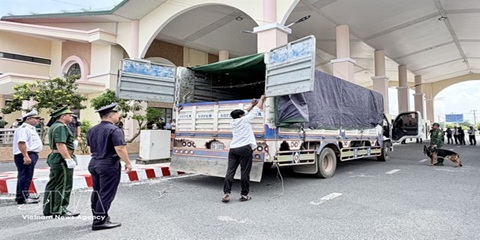
Trade between Việt Nam and Cambodia continues to grow, remaining a bright spot and a key pillar of bilateral cooperation as the two countries aim to raise two-way trade to US$20 billion in the coming years. After setting a record of more than $11.3 billion last year, bilateral trade reached about $8.7 billion in the first eight months of this year, up 8.3 per cent year on year.
TECHNOLOGY
AI BEGINNING TO RESHAPE RECRUITMENT CRITERIA
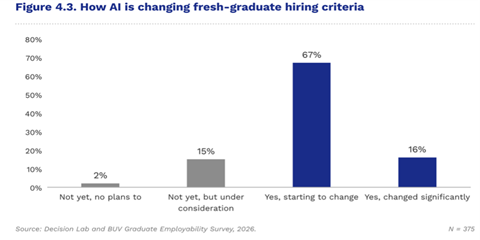
Digital literacy is the only capability area in which fresh graduates meet employers’ expectations, according to a new report. Yet, it is also the standard rising fastest, as businesses increasingly expect new hires to use AI effectively in the workplace. Some 83 per cent of employers say AI has changed, or is beginning to change, their hiring criteria, while 94 per cent report higher expectations for digital and AI capabilities than they had two to three years ago.
INFRASTRUCTURE / CONSTRUCTION / LOGISTIC / PORT
ĐÀ NẴNG GREEN-LIGHTS US$105 MILLION THAI DEVELOPMENT DEAL
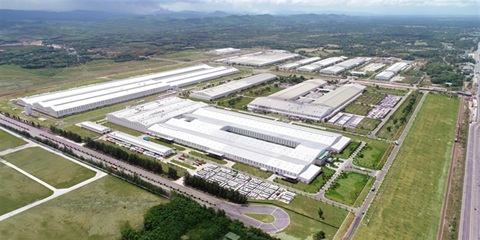
The central city has approved an investment proposal by Thailand’s WHA Group to develop infrastructure for the 400ha WHA Đà Nẵng Industrial Park project on two communes of Thăng Bình and Đồng Dương, with an investment of more than VNĐ2.7 trillion (US$105 million). The city said it approved WHA Industrial Development International's status as an investor in the project, which is expected to take place between 2027 and 2034.
VIETNAM ECONOMY INVESTMENT
MOBILE PHONE EXPORTS RISE 20% TO $51.8 BILLION IN FIRST NINE MONTHS
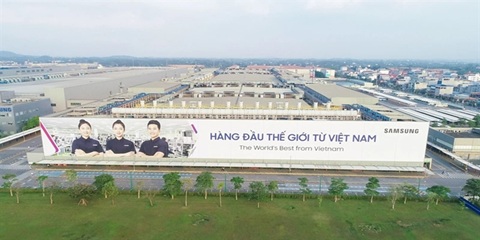
Exports of mobile phones and components rose 20 per cent year-on-year to nearly US$51.8 billion in the first nine months of 2026, with China, the US and Republic of Korea accounting for more than half of the total. Shipments to the three markets reached a combined $26.18 billion, or 50.6 per cent of total exports of the product group during the period, according to data from the Vietnam Department of Customs under the Ministry of Finance.
VIETNAM ECONOMY INVESTMENT
FRUIT AND VEGETABLE EXPORTS POISED TO HIT $10 BILLION IN 2026
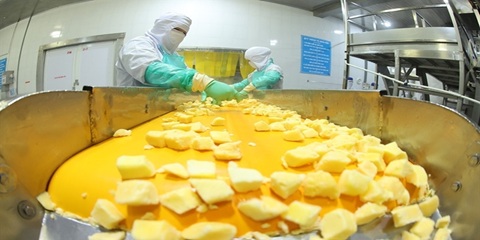
Fruit and vegetable exports are on track to reach nearly US$10 billion in 2026, after rising 19.9 per cent year on year to nearly US$7.4 billion in the first nine months, driven by strong seasonal demand and abundant tropical fruit supplies. The Ministry of Agriculture and Environment said the growth reflected stronger international demand for fresh produce and processed agricultural products.
GARMENT / TEXTILE
TEXTILE EXPORTS FACE DUAL CHALLENGES OF SUSTAINING ORDERS AND BOOSTING EFFICIENCY AMID GROWING COMPETITION
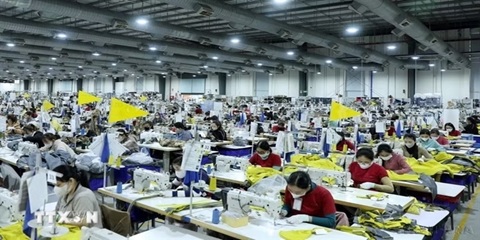
Data shows that the textile and garment sector maintained its growth momentum in the first nine months of this year. The industry's total export turnover reached an estimated US$35.721 billion in the first nine months of this year, up 3.3 per cent year-on-year. Despite posting encouraging export figures, Vietnamese textile and garment enterprises continue to navigate unpredictable market variables.
Events Sponsors






















